How Do I Get My Trucking Books Ready for Tax Season?
How Do I Get My Trucking Books Ready for Tax Season?
2. Maintenance, Repairs, and Equipment
3. Deductions That Truckers Commonly Miss
4. Factoring Fees and Load-Related Charges
5. Settlements, Adjustments, and Chargebacks
6. Insurance, Permits, and Compliance Costs
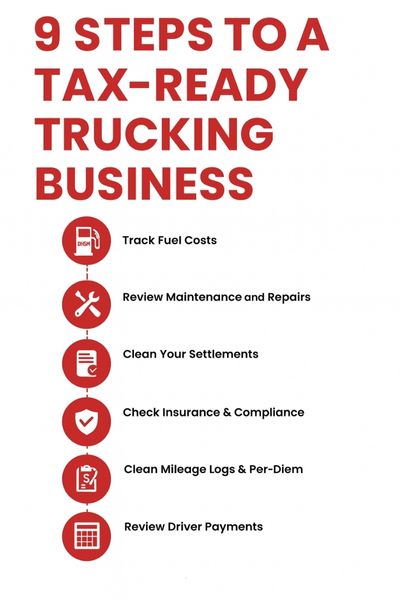
Getting your trucking books ready for tax season starts with having clear, accurate, and organized financial records. That means keeping track of every fuel receipt, repair bill, settlement, and deduction throughout the year—not just at tax time. When your numbers are current and properly categorized, you avoid surprises, reduce stress, and make filing a whole lot smoother. This guide breaks down the key records every trucking business should maintain so you can stay compliant and tax-ready all year long.

1. Fuel Costs
Fuel is usually your largest expense, so accuracy matters. Make sure all fuel card transactions and receipts are entered correctly. Missing fuel expenses can make your profit look higher than it really is.
2. Maintenance, Repairs, and Equipment
Throughout the year, trucks need work — tires, parts, unexpected repairs, and regular maintenance. These costs directly impact your bottom line. Review your maintenance invoices and repair records to ensure they’re included.
3. Deductions That Truckers Commonly Miss
Truckers often skip deductions simply because they weren’t recorded. Things like tolls, parking fees, truck washes, safety gear, load board subscriptions, and software can all reduce your taxable income. Make sure these everyday expenses aren’t forgotten.
4. Factoring Fees and Load-Related Charges
If you use factoring or quick-pay, those fees reduce your profit — but only when they’re recorded. Review your settlements and factoring statements to confirm fees, chargebacks, lumper fees, detention, and other adjustments are included.
5. Settlements, Adjustments, and Chargebacks
Your weekly or monthly settlements need to match your books. Check that all loads, reimbursements, advances, and deductions appear correctly. Clean settlement records make filing much smoother.

6. Insurance, Permits, and Compliance Costs
Truck insurance, registration, permits (IFTA, IRP, UCR), and safety fees should all be recorded. These can add up throughout the year and make a significant difference come tax time.
7. Driver or Contractor Payments
If you pay drivers or use contractors, review your payments to ensure they match your books. Consistency prevents headaches during filing and avoids mismatched records.
8. Mileage Logs and Per-Diem
Accurate mileage and per-diem tracking is key in trucking. Make sure your logs are updated and reflect the days you were on the road. Clean records help avoid missed deductions.
9. Final Reconciliation
Before filing, every account should be reconciled — your bank account, fuel card, credit card, factoring account, and settlements. When everything matches, you get a clear view of your real profit and avoid filing errors.
Where Thomas & Ledger Helps
Thomas & Ledger specializes in trucking bookkeeping. We organize your fuel, maintenance, settlements, deductions, and monthly records so your books stay clean, accurate, and tax-ready. If your numbers need cleanup before filing, or you want bookkeeping designed specifically for trucking businesses, we’re here to keep you on track and stress-free.
Learn more at thomasandledger.com.
